What we assess
- Diagnosis, oncologic plan and timing
- Expected or existing defect and prior radiotherapy
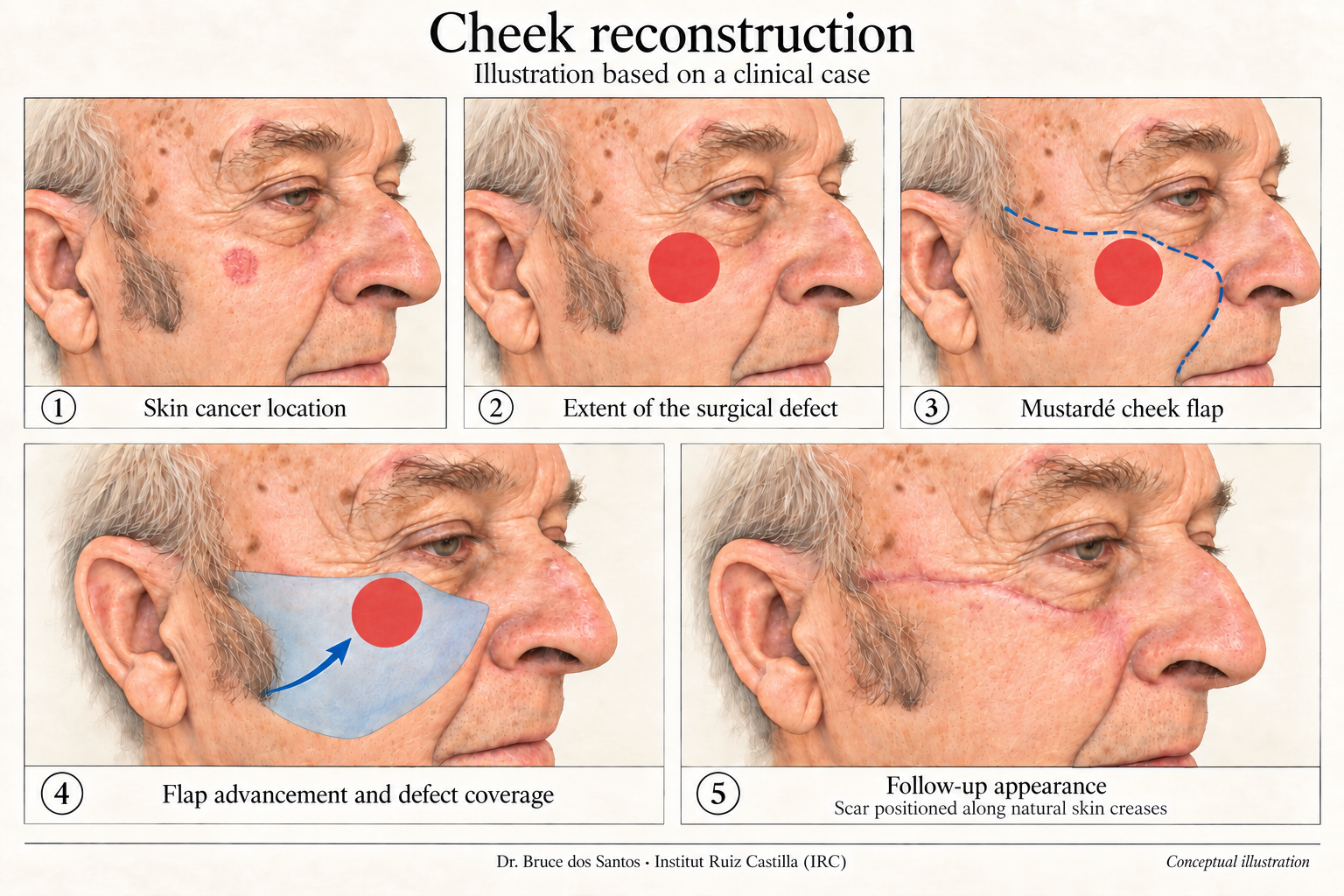
- Functional priorities and reconstructive options
Reconstructive surgery
Reconstruction following tumour surgery is planned around oncologic safety, functional needs and the anticipated defect — never as a reason to delay cancer treatment.
 Institut Ruiz CastillaOncologic reconstructionGeneral medical information · Individual planning
Reconstruction supports the oncologic pathway; it does not replace it. Recommendations are made only after records are reviewed and the reconstructive team has coordinated with the responsible cancer specialists.
This information cannot establish an indication and does not replace informed consent. A recommendation is made only after clinical records and examination have been reviewed.
Bibliography for this clinical topic. References are grouped for the page as a whole, rather than attached to individual sentences. The sources inform the general information; individual care and follow-up are tailored by the Institut Ruiz Castilla (IRC) team.
Guideline or consensus
Postmastectomy Breast Reconstruction in Patients with Non-Metastatic Breast Cancer: An Ontario Health (Cancer Care Ontario) Clinical Practice Guideline.Zhong T, Fletcher GG, Brackstone M et al. · Current oncology (Toronto, Ont.) · 2025 · DOI: 10.3390/curroncol32060357
Guideline or consensus
SEOM-GEIS Spanish clinical guidelines for the management of soft‑tissue sarcomas (2024).Serrano C, Arregui M, Carrasco I et al. · Clinical & translational oncology : official publication of the Federation of Spanish Oncology Societies and of the National Cancer Institute of Mexico · 2025 · DOI: 10.1007/s12094-024-03842-5
Guideline or consensus
European consensus-based interdisciplinary guideline for diagnosis and treatment of basal cell carcinoma-update 2023.Peris K, Fargnoli MC, Kaufmann R et al. · European journal of cancer (Oxford, England : 1990) · 2023 · DOI: 10.1016/j.ejca.2023.113254
Guideline or consensus
Evidence-Based Clinical Practice Guidelines: Reconstruction After Skin Cancer Resection; Autologous Breast Reconstruction with DIEP or Pedicled TRAM Abdominal FlapsAmerican Society of Plastic Surgeons
Bibliography checked: 28 September 2026. Original publication titles are retained.